Fireworks and Noise Anxiety in Pets: How to Help Your Dog or Cat
Fireworks can be frightening for many dogs and cats. Loud bangs, flashing lights and unfamiliar sounds can leave some pets feeling anxious, unsettled or desperate to hide.
If your pet struggles with fireworks or other loud noises, there are several things you can do to help them feel safer. If their anxiety is severe or getting worse, we can also help you put together a plan that suits them.
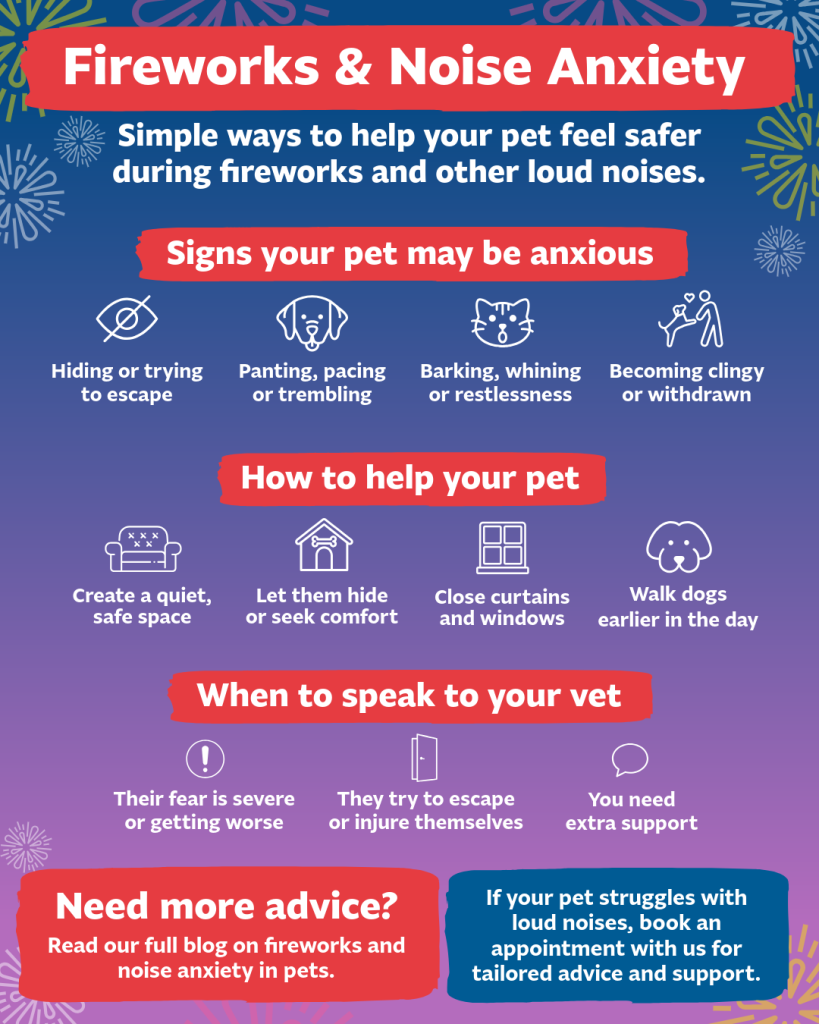
Signs of fireworks anxiety in pets
Pets show anxiety in different ways. Some become obviously distressed, while others may simply hide away or act differently from usual.
Signs to look out for include:
- Trembling or shaking
- Panting or pacing
- Hiding
- Barking, whining or excessive vocalising
- Becoming clingy or withdrawn
- Refusing food
- Trying to escape
- Toileting indoors
- Destructive behaviour
Cats can be particularly good at hiding stress, so even small changes in their usual behaviour are worth noticing.
How to prepare before fireworks begin:
Walk dogs earlier
Try to walk your dog before it gets dark and before fireworks are likely to start. Keeping dogs on a lead during fireworks season can also help prevent them from running off if they are suddenly startled.
Keep pets safely indoors
Bring cats indoors before fireworks begin and keep windows, doors and cat flaps closed. Check gates and garden boundaries too, particularly if your pet is likely to panic and try to escape. It's also worth checking that your pet's microchip details are up to date.
Create a safe space
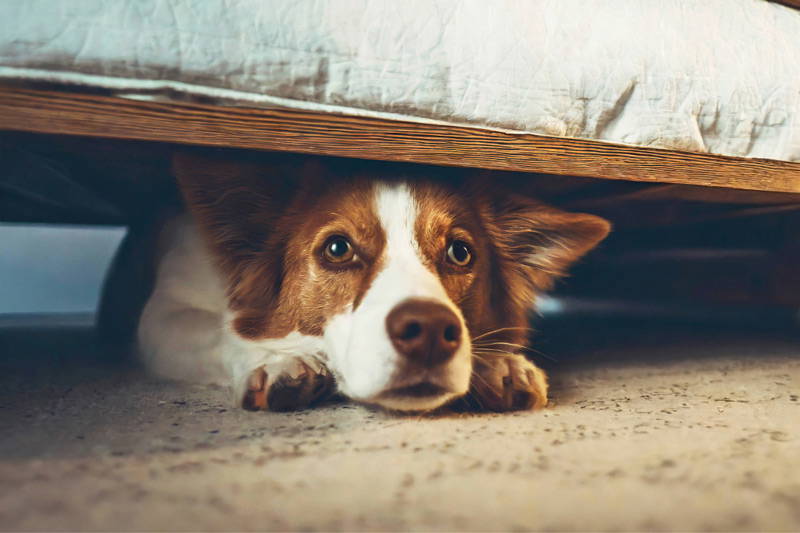
Give your pet somewhere quiet and comfortable where they can retreat if they feel frightened:
- a cosy bed
- a covered crate
- a quiet room
- somewhere under furniture
- a cardboard box or elevated hiding place for a cat
How to help your pet during fireworks
- Once fireworks start, try to keep their environment calm and predictable.
- Close curtains or blinds to reduce flashes from outside and keep windows shut to soften the noise.
- Background sound from the television, radio or calming music can also help make sudden bangs less noticeable.
- Try to stay calm yourself and behave as normally as possible.
- If your pet wants to hide, let them. If they come to you for reassurance, it is fine to comfort them gently.
Some pets may also enjoy treats, toys or enrichment activities, but do not worry if they are too anxious to engage.
What should you avoid?
Never punish your pet for being frightened.
Behaviours such as barking, hiding, pacing or toileting indoors may all be caused by anxiety.
You should also avoid taking a nervous pet to a fireworks display or deliberately exposing them to loud noises in an attempt to make them “get used to it”. This can make their fear worse.
Can calming products help?
Some pets may benefit from additional support such as pheromone products, calming aids or behavioural training.
For pets with ongoing noise anxiety, gradual sound desensitisation may also help. This involves introducing firework sounds at a very low level while your pet is relaxed, then slowly building up their tolerance over time.
This type of training is best started well before fireworks season.
If you are unsure which options are suitable for your pet, speak to us before trying new calming products or treatments.

How your vet can help with fireworks and noise anxiety
If your pet becomes very anxious around fireworks or other loud noises, book an appointment with us.
We can talk through how your pet reacts, how severe their anxiety is and what may help them feel more comfortable.
Depending on your pet, this could include:
- changes to their home environment
- behavioural advice
- calming products
- additional behaviour support
- prescription medication where appropriate
Every pet is different, so the best approach will depend on their individual needs, health and behaviour.
Help your pet feel safer this fireworks season
The best time to prepare for fireworks is before they begin. Creating a safe environment, recognising the signs of anxiety and knowing how to respond can all help make fireworks season easier for your pet.
If your dog or cat struggles with fireworks or other loud noises, book an appointment with us.
We can offer advice tailored to your pet and help you find the safest and most appropriate way to support them.
Call us on 01444 242500